
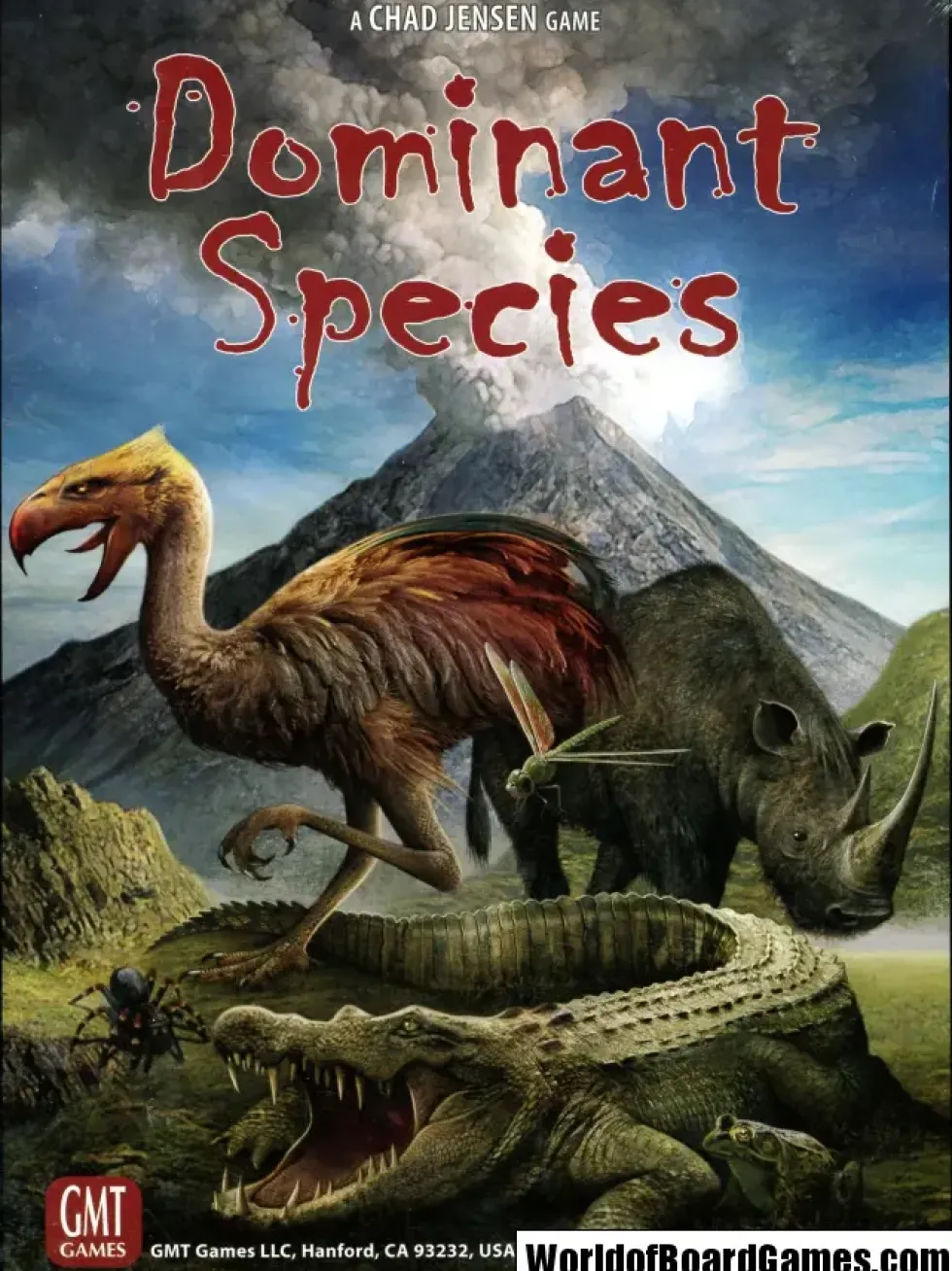
Dominant Species
kr541.20
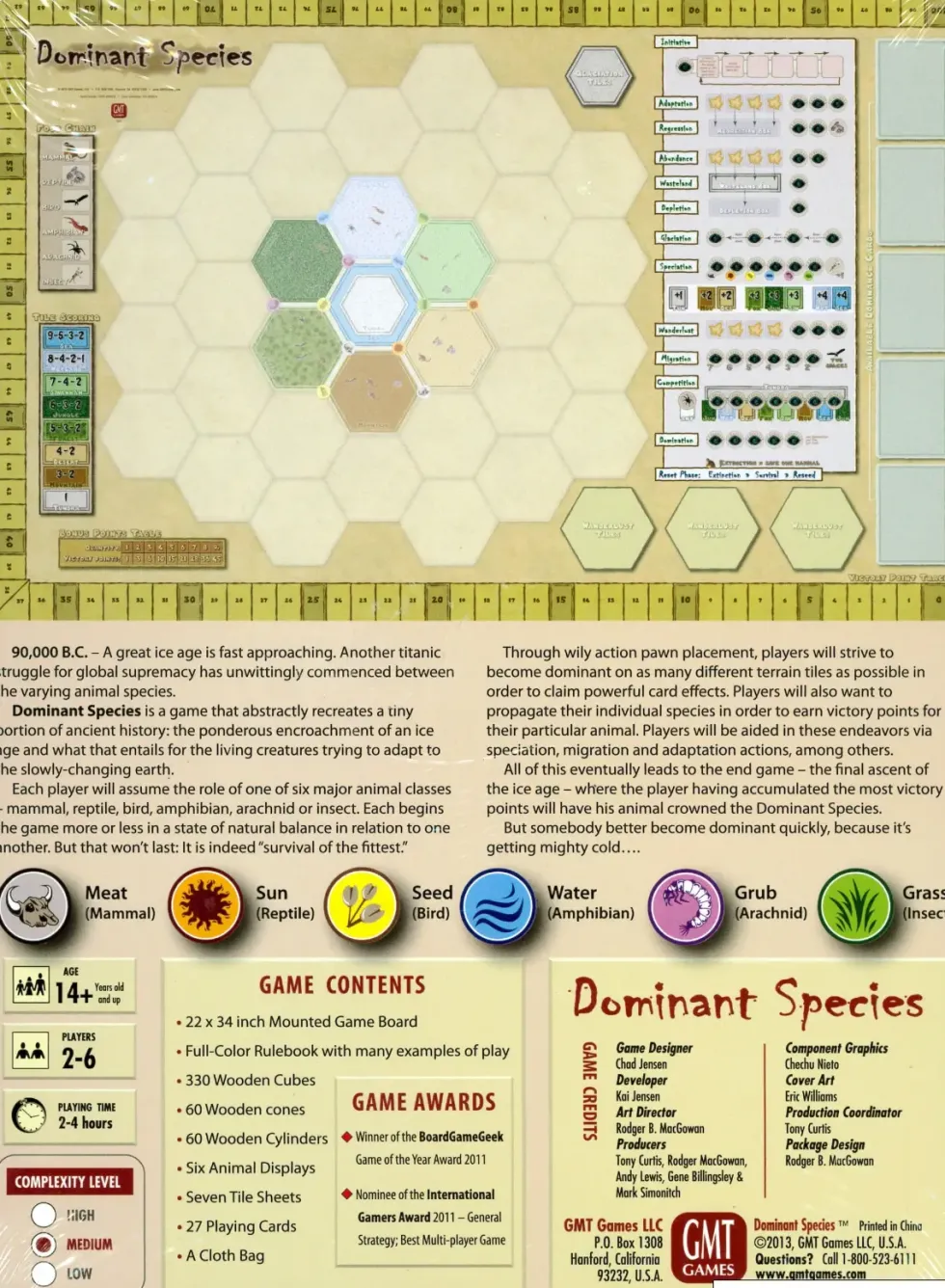
Throughout a game of Dominant Species large hexagonal tiles are placed on the board to create an ever-expanding interpretation of Earth as it might have appeared a thousand centuries ago. These tiles represent the various terrain such as desert, mountain, forest and sea. The smaller Tundra tiles will be placed atop these larger tiles – converting them into Tundra in the process – as the Ice Age encroaches.
The cylindrical Action Pawns (or “AP”s) drive the game. Each AP will allow a player to perform the various actions that can be taken—actions such as growth, environmental change, migration, competition or glaciation. During each turn’s opening Planning Phase players will take turns placing their Available APs onto the Action Display, indicating a specific action that player wishes to perform that turn. During the following Execution Phase these APs will be removed in a prescribed order and their indicated action executed.
Generally, players will be trying to enhance their own Animals’ survivability while simultaneously trying to hinder that of their opponents’—hopefully collecting valuable victory points along the way. The various cards will aid in these efforts, giving players useful one-time abilities or an opportunity for recurring victory point gains.
Throughout the game Species – represented by colored wooden cubes – will be added to, moved about in, and removed from the terrain tiles in play (the “Earth”). Element markers will be added to and removed from both Animals (“need”) and Earth (“supply”).
When the “Ice Age” card triggers the end of the game, players will conduct a final scoring of each tile—after which the player controlling the Animal with the highest VP total wins the game.
Be the first to review “Dominant Species”
Related products


Familjespel
Familjespel

Familjespel
Familjespel

Familjespel


Barnspel


Familjespel


Kortspel


Barnspel
Familjespel

Barnspel



Familjespel
Barnspel
Reviews
There are no reviews yet.